Learning to slow down, find rest in God, and make more room for Him in the everyday moments of life
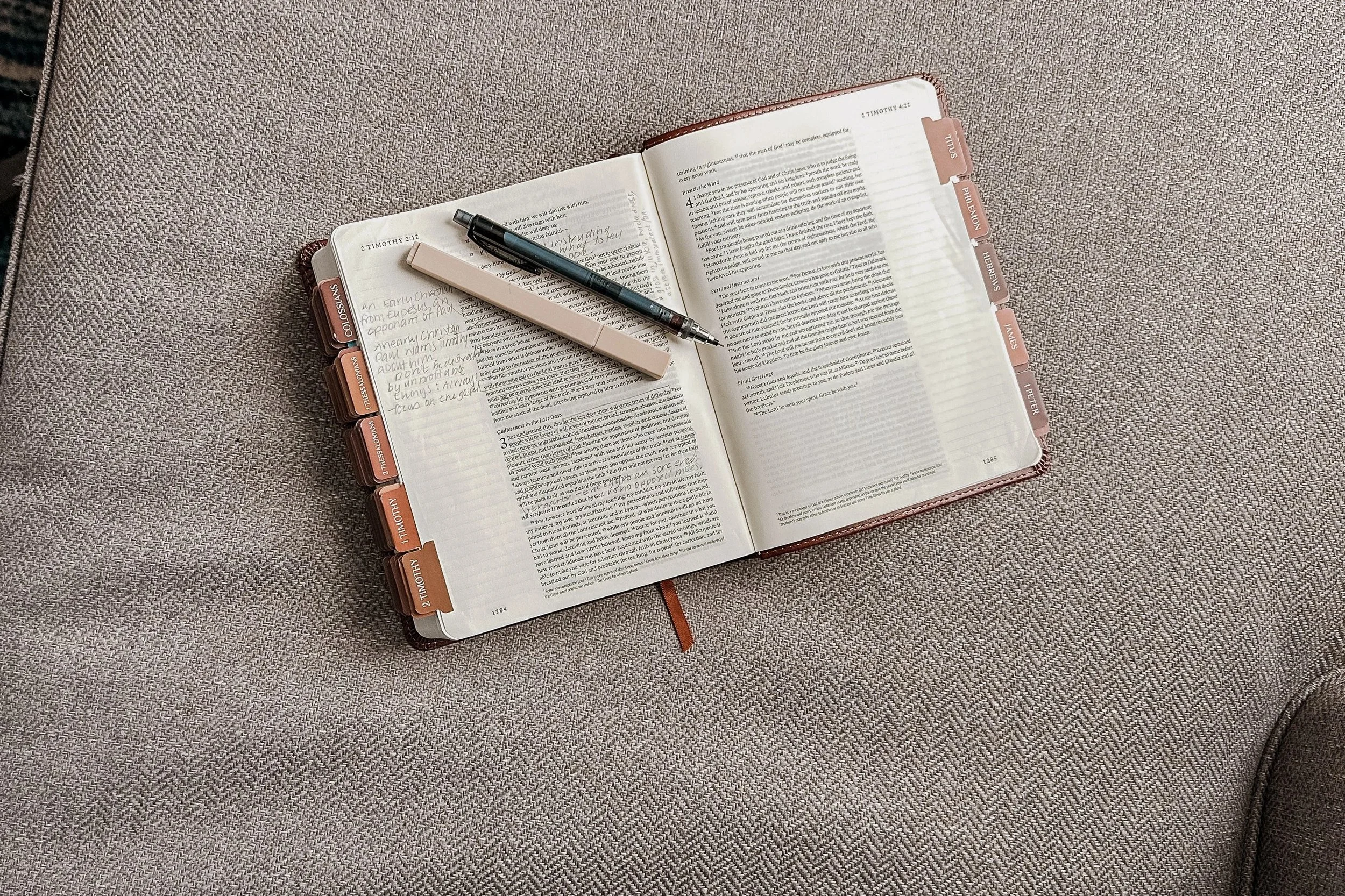
a bible sits open on a sofa, with a mechanical pencil and highlighter
The Pressure to Always Be Doing Something
In today’s society, it often feels like it’s all about hustle, hustle, hustle. We move from one thing to the next without pausing to breathe. We finish one task, only to ask ourselves, What’s next? Is this how we’re supposed to be living? Is it even living, or are we just existing?
I’ve noticed a growing trend towards going analogue this year: stepping back from technology and returning to some of the simpler ways of living we remember from the 1990s. I was a teenager in the 90s, and yet I sometimes struggle to remember exactly what I did with my spare time.

an image of multiple cassette tapes from Unsplash
I think I listened to music, either on the radio or on cassette tapes, including my own mixtapes of songs I’d recorded from the radio. I read books on my bed, usually with music playing, or I drew something. Nothing particularly extraordinary, but those little things filled my time.
Somewhere along the way, we seem to have picked up the idea that we should always be doing something productive. Even when we have a few spare minutes, we can find ourselves reaching for our phones to check social media. We fill quiet moments without thinking, as though having nothing to do is something to avoid.
But what if we don't need to fill those quiet moments? What if we actually need them?
I know I'm not alone in reaching for my phone when I don't really need to. I can't count how many times I've picked it up to check something on Google or look at my calendar, only to find myself scrolling through Instagram instead, having completely forgotten what I picked it up for in the first place!
I'm not saying that technology is bad or that we need to abandon it altogether. But I do wonder what we're missing when we never allow ourselves to simply be still.
Perhaps the question isn't just what we could do instead of scrolling, but whether we've forgotten how to rest in the first place.
What Does It Mean to Rest Biblically?
What is rest?
The Cambridge Dictionary defines rest as stopping an activity or being inactive for a period of time in order to relax and regain our strength.
But is rest simply about stopping what we're doing so that we can recharge before starting again? Or is there something more to it?
Right at the beginning of the Bible, we see God establishing a pattern of rest.
At the end of Genesis 1, God had finished His work of creation. Genesis 2:2–3 tells us:
““And on the seventh day God finished his work that he had done, and he rested on the seventh day from all his work that he had done. So God blessed the seventh day and made it holy, because on it God rested from all his work that he had done in creation.””
I find it interesting that, in the creation account, man's first full day on earth was the seventh day, the day God had blessed and made holy as a day of rest.
God wasn't resting because He was exhausted. His work was complete. He set apart the seventh day, establishing a pattern that would later become part of His instructions to His people.
I wonder how often we stop to consider how important rest is in our own lives.
Society seems to have moved away from the idea of setting aside a regular day to rest. Here in the UK, I remember growing up when large shops were closed on Sundays, and the local corner shop would open for just a few hours so people could buy the Sunday paper. Sunday felt different from the other days of the week.
Things have changed considerably since then. Many of us can shop, work and keep ourselves occupied throughout the week, including Sundays. Although this brings convenience, I wonder whether we've lost something along the way: the opportunity to step away from our usual routines and make room for rest.
In Exodus 20:8–10, God gives His people the commandment to remember the Sabbath day and keep it holy:
““Remember the Sabbath day, to keep it holy. Six days you shall labour, and do all your work, but the seventh day is a Sabbath to the LORD your God. On it you shall not do any work, you, your son, or your daughter, your male servant, or your female servant, or your livestock, or the sojourner who is within your gates.””
A day off isn't necessarily the same as practising the Sabbath. A day off can be filled with errands and chores, and we can be busy in a different way than when we're working. The Sabbath is about setting aside our usual work, making space for rest and worship, and turning our attention towards God rather than allowing ourselves to be consumed by everything that needs doing.
Sabbath is an opportunity to step away from the things that constantly demand our attention and remember that our lives don't depend on our own efforts alone. We can trust God to sustain us, even when we stop striving and allow ourselves to rest.
Ultimately, Sabbath is an invitation to set aside time for God, enjoy His presence and receive the rest He offers.
In Matthew 11:28, Jesus extends this invitation:
““Come to me, all who labour and are heavy laden, and I will give you rest.””
I find it comforting that Jesus doesn't tell us to get everything done first or to sort ourselves out before we come to Him. He invites us to come just as we are, bringing our weariness and burdens with us.
Perhaps learning to rest begins with recognising that we don't have to fill every moment of our day with activity. We can step away from the things that constantly demand our attention and make room for God. But what does that actually look like in our everyday lives?
Making Space for God in the Quiet
So how do we make space for God in the quiet we now seem to dread?
It doesn't need to be a huge thing. Start small. Pull out your Bible and read a verse to meditate on. Journal about what you've read or write in your prayer journal. Sit quietly with God and watch nature do its thing in your back garden. Take a walk and pray as you go. Or simply get a journal and write out your thoughts about anything and everything. Sometimes, getting those thoughts swimming around in our heads down on paper can help us feel less cluttered mentally.
A key part of making space for God might be removing some of the distractions that usually compete for our attention. Try putting your phone in another room while you spend time with God, or keep it tucked away during your prayer time. When you go for a prayer walk, you could leave it at home if that's practical, or simply keep it out of sight.
In Psalm 46:10, we read:
a circular lifebouy is on a post next to a bench, facing a pond
“Be still, and know that I am God.
I will be exalted among the nations,
I will be exalted in the earth!”
But what does God mean when He tells us to be still?
Being still doesn't necessarily mean sitting perfectly quietly for a set amount of time. It can mean slowing down enough to turn our attention towards God, remembering who He is and trusting Him, even when life around us feels busy and unsettled.
Perhaps that looks like reading Scripture slowly rather than rushing through a reading plan. Perhaps it's praying without worrying about finding all the right words, sitting quietly and reflecting on God's goodness, or taking a walk and appreciating the beauty of His creation.
The important thing is that we give ourselves the opportunity to be present with God, rather than constantly reaching for something to fill the silence.
And this isn't about doing more spiritual things in order to rest. The point is to make space for God, not to create another list of things we feel we ought to accomplish. We already have enough to-do lists for work, chores, and errands. Our time with God doesn't need to become another one.
That said, not every quiet moment needs to be spent praying or reading Scripture. Sometimes, simply enjoying the garden, making something with our hands, or appreciating the ordinary moments of life can help us slow down, become more present, and notice God's goodness in the everyday.
Rediscovering the Joy of Offline Living
No doubt you've seen the growing trend online towards living a more analogue life. It's about returning to some of the simpler activities many of us remember from the 1990s and spending more time offline, particularly away from social media.
As I mentioned earlier, I was a teenager towards the end of that decade, so I can still remember what life was like before computers and phones became such a big part of our everyday lives.
someone is reading a book
I know I'm not the only one who reaches for their phone to doomscroll when they're feeling anxious or overwhelmed. I do it too. But the strange thing is that it rarely helps. If anything, I can end up feeling worse afterwards. Even though I know this, it's become such an ingrained habit that I sometimes do it without even thinking.
So what if, instead of automatically reaching for our phones, we made a little more room for the simple things in life?
As we've already explored, spending time with God doesn't have to be limited to sitting down with our Bibles or setting aside a specific time to pray. We can also learn to appreciate His goodness in the ordinary moments of our days.
What might it look like to be more present in those moments, rather than constantly consuming content online?
There are some simple offline activities I enjoy that help me slow down. I love reading a physical book, although I also enjoy reading on my Kindle, which I keep on aeroplane mode unless I'm downloading or deleting a book. I'm also a journaler, and I'm trying to get back into colouring.
They're simple things, but I find they help me slow down and feel calmer. They give me something to enjoy without the constant stream of notifications, updates and information that comes with being online.
You may have no interest in doing the things I enjoy, and that's absolutely fine. The important thing is to find activities that you enjoy and that help you slow down. For example, you could try:
Going for a walk and noticing what's around you.
Baking, gardening or arranging flowers.
Listening to music without simultaneously scrolling.
Writing a letter or having an uninterrupted conversation.
Sitting outside with a cup of tea or coffee and allowing yourself not to do anything productive.
Rediscovering an old hobby or trying something new.
Not everything offline is restful; we can fill an entire day with chores without ever slowing down. The question is whether an activity helps us step away from constant consumption and engage more intentionally with the life God has given us.
We don't have to fill every quiet moment with something productive. Sometimes, we can simply enjoy what we're doing, appreciate the ordinary things around us and be thankful for the time we've been given.
Simple Ways to Rest Without Reaching for Your Phone
Recognising When We Reach for Distraction
I've been asking myself some questions about my phone habits. What am I thinking about? What am I looking for? What do I really need? Am I looking for a distraction? Am I feeling overwhelmed? And what might be better for me instead?
These questions have brought to mind the story of Mary and Martha in Luke 10:38–42.”
Martha in Luke 10:38–42.
Martha welcomed Jesus into her home, while her sister Mary sat at His feet and listened to His teaching. Martha, meanwhile, was distracted by all the preparations that needed doing. Eventually, she approached Jesus and asked Him to tell Mary to help her.
Jesus answered:
“Martha, Martha, you are anxious and troubled about many things, but one thing is necessary. Mary has chosen the good portion, which will not be taken away from her”
I'd read this passage before, but this time I found myself thinking about Jesus' words: “you are anxious and troubled about many things.”
Martha was busy serving, but her attention had become consumed by everything that needed doing. It made me wonder how often I do something similar. When I'm anxious or overwhelmed, do I sometimes keep myself occupied rather than stop and consider what's really going on? Do I reach for my phone to distract myself from thoughts or feelings I'd rather not sit with?
Of course, being busy isn't always a bad thing, and serving others matters. But this passage reminds me that it's possible to become so caught up in what we're doing that we lose sight of what's most important.
Mary chose to sit with Jesus and listen to Him. She wasn't trying to accomplish something or tick another task off her list. She was giving Him her attention.
a cup of tea sits on a table with a closed notebook and a pen
I wonder what this might look like in our own lives.
When we're troubled or anxious, perhaps our first instinct is to keep busy, scroll through our phones or find something else to occupy our minds. But what if we paused instead? What if we took a moment to pray, bring our worries to Jesus and consider what we really need?
Perhaps, like Mary, we need to remember that we don't always have to be doing something. Sometimes, we need to stop and give Jesus our attention.
What am I actually seeking when I reach for my phone?
That's a powerful question because the answer won't always be the same. Sometimes I genuinely want entertainment; other times, I might need connection, a break, reassurance, or simply some time to process my thoughts.
Not every phone habit is bad. But I think it's important to become more aware of our choices and learn to turn to God when we need Him, rather than automatically reaching for our phones without thinking.
The next time you find yourself reaching for your phone without thinking, try pausing for a moment and asking yourself what you really need. Here are a few alternatives you could try, depending on how you're feeling.
When you feel overwhelmed, pause and pray, even if only for a moment.
When you feel restless, step outside, take a short walk or do something creative.
When you need connection, message a friend or spend some time talking with someone you love.
When you're tired, consider whether you need genuine rest rather than more stimulation.
When you need encouragement, read a Psalm or return to a passage of Scripture that reminds you of God's faithfulness.
Creating a Rhythm of Rest in Everyday Life
Mark 2:27
“And he said to them, ‘The Sabbath was made for man, not man for the Sabbath.’”
Jesus reminds us that the Sabbath was given for our good. Rest isn't another religious obligation we have to squeeze into an already busy schedule, or another area of life in which we can feel we're failing.
What is the first thing you do when you get up in the morning? Do you reach for your phone, check overnight notifications or catch up on the morning news? Or do you start your day by reading a Bible verse or chapter?
I block social media on my phone from 8.30 pm until 8 am. I've recently extended this to include the daytime at weekends, although I allow access from 6 pm for a couple of hours so I can check my notifications.
I've spoken about this over on Instagram, where I've shared how I've been struggling to get into God's Word consistently in the mornings. Reading in the evenings hasn't really worked for me either, as I've found it difficult to focus.
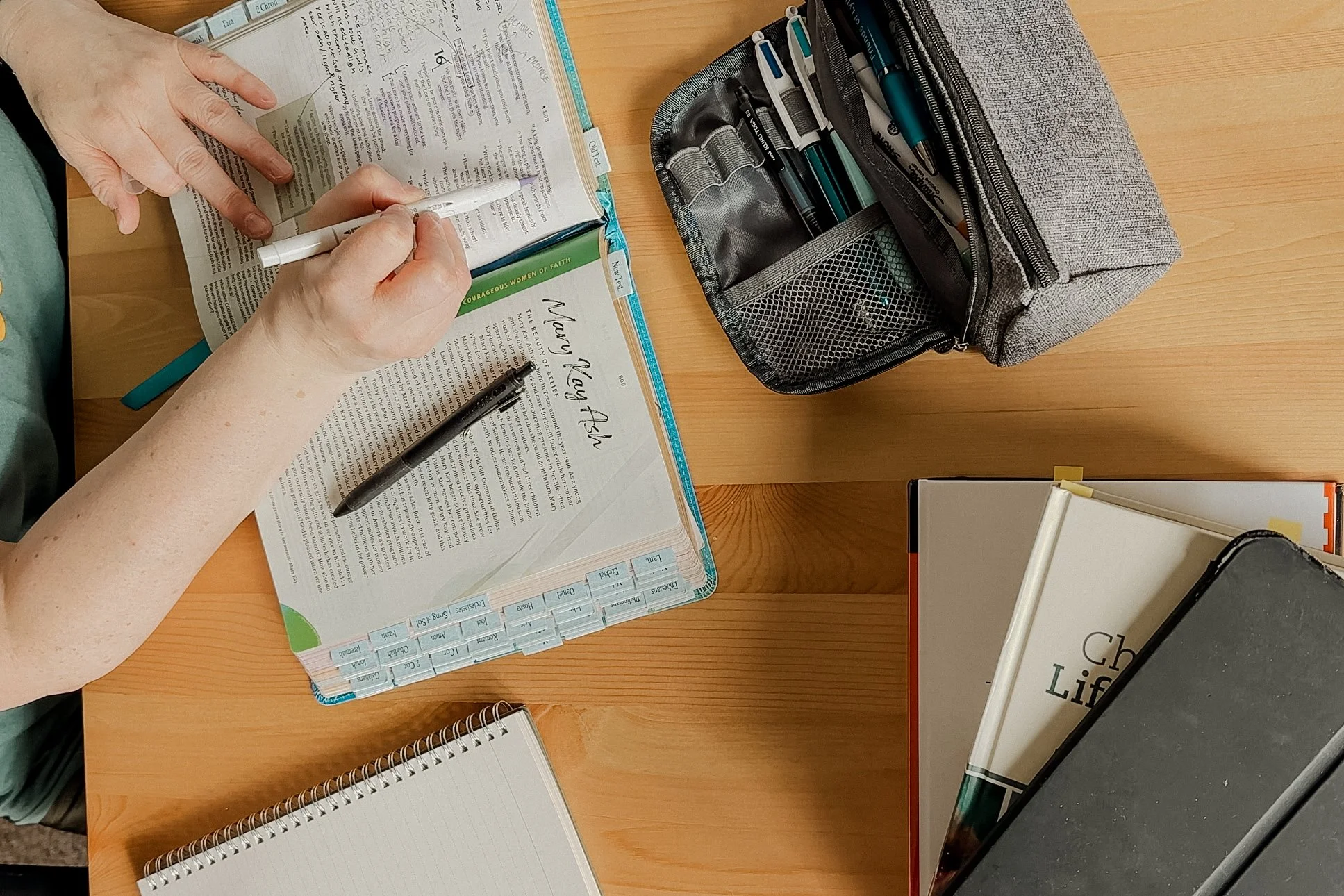
someone is highlighting their bible
Since changing jobs earlier this year, my working hours have changed too. I now start an hour earlier than I used to, and I haven't managed to settle into a morning routine that includes time to read my Bible. I'm struggling to get up early enough as it is, let alone set my alarm even earlier!
At the moment, I read a clean, no-spice book while I eat breakfast, then journal while I drink my first cup of tea of the day. I used to read my Bible before journalling, but my anxiety has been particularly difficult since my job change, and I've found that I need to spend more time writing out my thoughts.
I haven't solved this yet, and I'm still working through it. Habits and routines take time to establish, and sometimes it takes a bit of trial and error to discover what works for us, especially when our circumstances change.
Journalling helps me process what's on my mind. One of the questions I've been reflecting on during my quiet time is, How can I get back to reading the Bible more consistently?
I don't have all the answers yet, but perhaps I need to start small rather than put pressure on myself to find the perfect routine. I want to make more room for God's Word, but I also need to be realistic about what works in this season of my life.
Mark 2:27 reminds me that rest is a gift, not another standard we have to meet. Although Jesus was speaking specifically about the Sabbath, I think the principle is worth remembering in our everyday lives, too. Our time with God shouldn't become another source of pressure. Instead, we can look for ways to make space for Him that are both intentional and realistic.
Learning to Be Present in the Ordinary
Where Is God in the Ordinary Moments of Our Day?
I've continued to pray over my day, asking God for any help I might need as I walk into work. I also try to take a prayer walk around a nearby park during my lunch break.
I know that God is always with us, but I still struggle to fully comprehend what that means. I've started praying over my appointments and surrendering them to God when I remember.
But how can I slow down enough to become more aware of His presence and notice Him at work in my everyday life?

I've found a lady on Instagram who shares Bible verses we can pray over our husbands, children and the day ahead. This is something I could incorporate into my walk to work or during the quieter moments when I'm off the counter.
I try to take a breather whenever I can, but sometimes I can spend several hours serving customers without a chance to stop and catch my breath.
The good news is that we don't always have to stop what we're doing to turn our thoughts towards God. I can pray silently on my walk to work, ask God for patience during a difficult interaction, or thank Him for a moment of encouragement. On days when work is relentless, I may not manage to do these things as intentionally as I'd like, and that's okay.
Prayer isn't about meeting a daily target or getting everything right. It's about building a relationship with God and learning to turn to Him throughout our day. He invites us to bring Him our worries, ask for His help and thank Him for His goodness.
I think this is something I need to practise more at home, on my days off and during my Sabbath rest. As I learn to turn my thoughts towards God in the ordinary moments of life, I hope it will become more natural to turn to Him at work when I need His help, too.
Paul encourages the Thessalonians to “pray without ceasing” (1 Thessalonians 5:17), and this is something I'd like to grow in. I don't think this means we must be consciously praying every second of the day. Rather, it's about making prayer a regular part of our lives, turning to God, depending on Him and remembering His presence as we go about our everyday responsibilities.
We don't have to escape our everyday lives to spend time with God; we can learn to walk with Him in the middle of them
Giving Ourselves Permission to Rest
Why do we sometimes struggle to stop even when we know we need to?
We can feel guilty when we're resting, with chores still to do, and believe we must finish everything before we can relax. There's always another task to complete, another thing to tidy or something else that needs our attention.
But is it really possible to get everything done? And what happens when we make finishing our to-do list a condition of allowing ourselves to rest?
Psalm 127:1–2 reminds us that our lives don't depend entirely on our own efforts. The psalm speaks about the futility of working and striving without recognising our dependence on God. Verse 2 describes those who rise early and work late, eating the bread of anxious toil, before reminding us that God gives sleep to those He loves.
This doesn't mean that work is unimportant or that we should neglect our responsibilities. Rather, it reminds us that we can work faithfully without allowing worry and constant striving to consume us. We can do what needs to be done, ask for help from the people we live with, and trust God with the things that are beyond our control.
Sometimes, we may need to remind ourselves that the washing can wait, the house doesn't have to be perfectly tidy, and not every task needs to be completed today. There will nearly always be something else we could do, but that doesn't mean we have to keep going until we're exhausted.
There's a difference between being faithful in our responsibilities and believing we must do everything ourselves.
Ephesians 2:8–9 reminds us that our salvation is a gift of God's grace, not something we can earn through our own efforts. We are saved because of God's grace, not because we've done enough to deserve it.
In a similar way, we don't have to earn the right to rest by completing every task on our list. Rest is something we can receive with gratitude, recognising that we are human and that our strength has limits.
So perhaps giving ourselves permission to rest begins with accepting that we don't have to do everything. We can be faithful in the responsibilities God has given us while also recognising when it's time to stop.
What might it look like to trust God enough to put something down, even when there's still more to do?
A Gentle Invitation to Rest
So where does this leave us as we learn to rest in God and slow down in a world that never stops?
Some of my favourite and most well-known verses are found in Matthew 11:28–30, where Jesus invites us to come to Him:
“Come to me, all who labour and are heavy laden, and I will give you rest. Take my yoke upon you, and learn from me, for I am gentle and lowly in heart, and you will find rest for your souls. For my yoke is easy, and my burden is light.”
It comforts me to remember that Jesus invites us to come to Him with our weariness and burdens. We don't have to get everything done first, find the perfect routine or have our lives in order before we can turn to Him. We can come as we are and learn from Him.
Learning to rest won't necessarily happen overnight. It may take time to recognise the habits that keep us busy, become more intentional about how we use our phones, or find ways to make more room for God in our everyday lives. We won't always get it right, and that's okay. We can keep taking small steps toward a life where we're more present, less distracted, and more willing to trust God.
So, what is one small change you could make this week? Are you willing to leave your phone in another room for ten minutes, take a prayer walk, read Scripture without rushing, or simply enjoy a quiet moment?